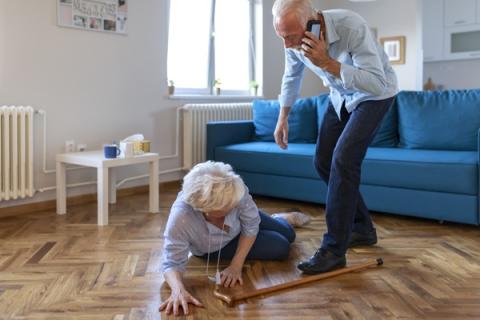
What to Do After a Fall
Don’t rush to lift them up. This is the most important thing to remember. The instinct is to get the person off the ground as quickly as possible, but moving someone too soon—or incorrectly—can make things significantly worse. A fall can cause fractures, spinal injuries, or head trauma that aren’t immediately visible. Before anyone moves, take a breath and assess the situation.
Check in with them first. If the person is conscious, talk to them. Ask how they’re feeling, whether they have any pain, and where the pain is located. Watch for warning signs that suggest a serious injury: severe pain in the hip, back, or neck; numbness or tingling in the limbs; confusion or disorientation; or an inability to move a part of their body. If any of these are present, do not attempt to move them.
Call 911 if there is any doubt. When in doubt, call. Emergency responders are trained to move injured people safely, and getting professional help quickly is always the right call if there’s any chance of a serious injury. This is especially true if the person hit their head, lost consciousness even briefly, or cannot tell you clearly what happened.
While you wait for help, stay with them. Keep them warm if possible. Place a blanket or jacket over them and keep them calm and talking. Don’t give them anything to eat or drink.
If they seem uninjured and want to get up. If the person insists they are not hurt and wants to get up, don’t simply grab them under their arms and haul them to their feet. Instead, help them roll slowly onto their side, then bring a sturdy chair over. Let them push up to a kneeling position, place their hands on the chair seat, and rise slowly at their own pace. You are there to guide and steady, not to lift.
Even if they seem fine, encourage them to sit and rest for a few minutes before walking. Watch for dizziness, confusion, or any change in how they seem.
After the fall
A fall is often a signal that something else is going on—a medication side effect, a balance problem, low blood pressure, a urinary tract infection, or a vision issue. Encourage the person to follow up with their doctor, even if they feel perfectly fine. Many serious complications from falls, including internal bleeding after a head injury, don’t show up immediately.
If the person lives alone, this is also a good moment to gently raise the conversation about safety at home, such as grab bars, better lighting, removing trip hazards, or a medical alert device.
The best thing you can do in the moment is slow down. Don’t panic, don’t rush to move them, and don’t leave them alone. A calm, steady presence, combined with a willingness to call for help, is the most valuable thing you can offer someone in those first frightening minutes after a fall.